Introduction
Studio apartments are often seen as cozy and compact living solutions. They offer flexibility, affordability, and a sense of simplicity that larger apartments might lack. But living in a studio requires thoughtful planning to make the most of limited space. Understanding the typical layout, choosing the right furniture, and implementing smart storage solutions are essential for turning a small area into a comfortable, functional home.
Typical Studio Apartment Layouts
Studio apartments are usually open-plan spaces where the living, sleeping, and kitchen areas are combined into a single room. Bathrooms are often the only separate area. Despite their small footprint, studios can be surprisingly versatile. The layout often depends on the building design and square footage, which can range from 300 to 600 square feet.
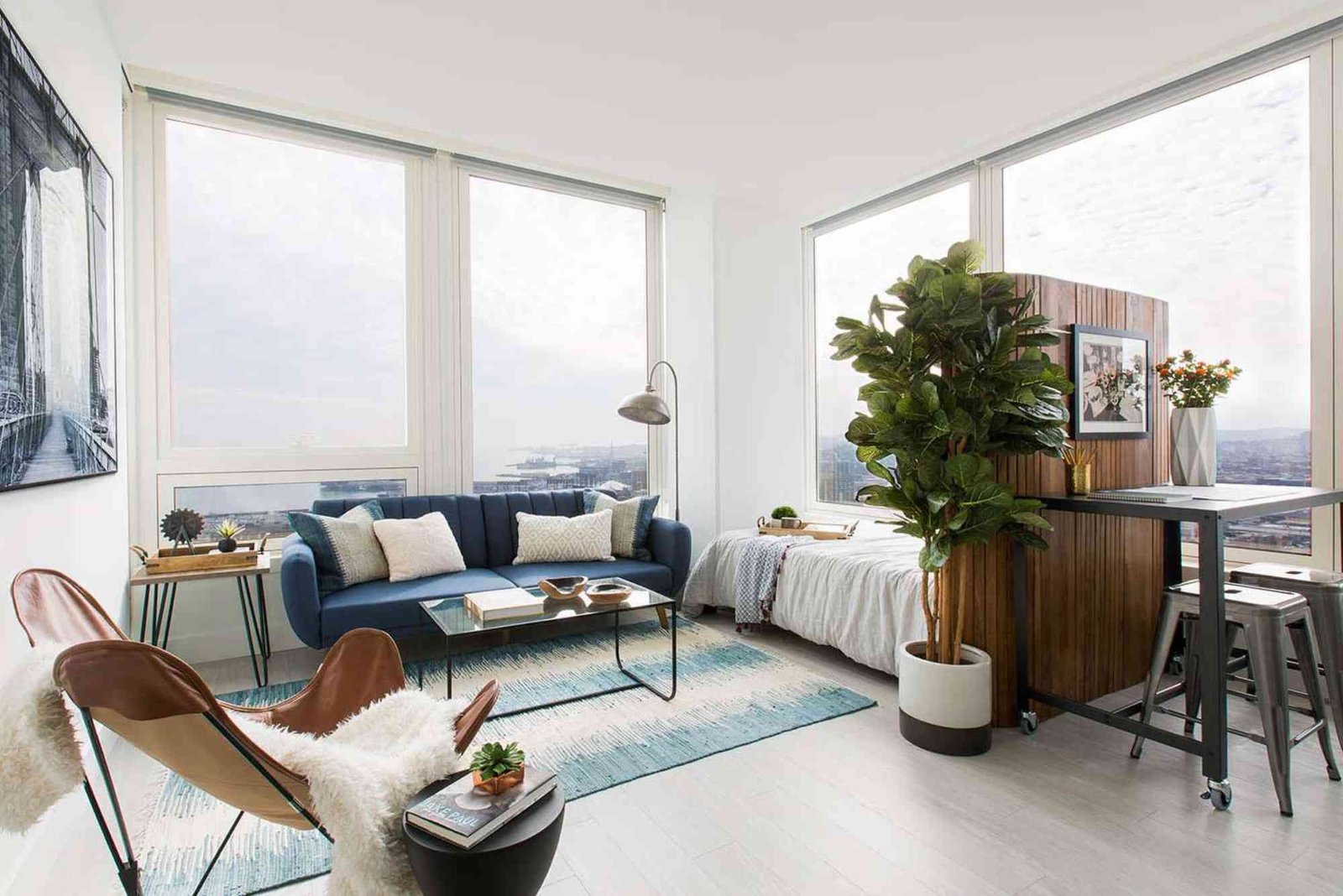
Some studios feature a rectangular layout, where the bed and living area are placed at opposite ends, while a kitchenette sits along one wall. This layout makes it easier to divide the space visually. Another common option is a square layout, which allows more freedom for furniture placement but can feel cramped if the arrangement is not carefully planned. Certain studios also include alcoves or niches, perfect for a small desk, reading corner, or wardrobe. A practical layout is essential for maintaining a sense of flow and avoiding a cluttered feel. Many residents use rugs, room dividers, or open shelving to create distinct zones within the studio without blocking light or movement.
Furniture Ideas for Studio Apartments
Choosing the right furniture in a studio is crucial because every piece must balance style, comfort, and functionality. Opting for multi-purpose furniture can save space and enhance the apartment’s usability.
Sleeping Solutions
A Murphy bed or a fold-out sofa bed is ideal for studios, as it frees up floor space during the day. Loft beds are also popular, especially in studios with higher ceilings, allowing the area underneath to serve as a workspace or lounge. For a simpler approach, a platform bed with storage drawers can double as a place to store clothes, linens, or other essentials.
Seating Options
Seating should be comfortable yet compact. A loveseat or a modular sectional that can be rearranged works well in a small area. Accent chairs with built-in storage can provide extra seating without taking up too much space. When selecting a coffee table, consider one with shelves or hidden compartments to store books, remotes, and magazines.
Dining and Work Areas
In small studios, dining and work areas often share the same space. Foldable dining tables or wall-mounted desks are perfect for these situations. They can be folded away when not in use, keeping the apartment feeling open and uncluttered. Bar stools paired with a kitchen island or counter can double as both seating and workspace. Small floating shelves above the desk can hold office supplies or decorative items.
Storage-Friendly Furniture
Storage is one of the biggest challenges in a studio. Furniture that doubles as storage is essential. Ottomans, benches, and coffee tables with hidden compartments are versatile solutions. Bookshelves can act as room dividers, providing storage while separating living zones. When buying furniture, always look for pieces that are proportional to the apartment’s size, avoiding anything oversized that would overwhelm the room.
Smart Storage Tips for Studio Apartments
Effective storage solutions can transform a studio from cluttered to cozy. Maximizing vertical space, using multi-purpose furniture, and keeping only what’s essential are key strategies.
Vertical Storage
Tall bookshelves, wall-mounted cabinets, and hooks on walls or doors make use of vertical space. Floating shelves are perfect for storing books, decorative items, or kitchenware without taking up floor space. Pegboards can be installed in the kitchen or workspace to hang utensils, tools, or office supplies efficiently.
Under-Bed and Hidden Storage
The area under the bed is often underutilized. Storage bins, drawers, or rolling containers fit neatly under a bed or sofa. Murphy beds with built-in storage provide an even more compact solution. Furniture with hidden compartments, such as ottomans or coffee tables, adds storage without adding clutter.
Multipurpose Storage
Every piece of furniture in a studio should serve more than one function whenever possible. A dining table can double as a desk, and a bench can be both seating and storage. Using modular storage cubes allows for flexibility, enabling residents to rearrange them according to changing needs.
Decluttering and Organization
Keeping a studio organized requires regular decluttering. Prioritize items that are truly necessary and consider donating or selling things that are rarely used. Baskets, bins, and drawer organizers can help keep small items in order. Labeling storage containers also saves time when searching for items, reducing frustration in a compact space.
Styling Tips for Studio Apartments
A well-styled studio feels larger and more inviting. Color, light, and design choices play a major role in making a small space comfortable.
Light and Color
Lighter colors on walls and furniture can make a studio feel airy and open. Mirrors reflect light and give the illusion of more space. Combining natural light with well-placed lamps can brighten dark corners, creating a more expansive feel.
Zoning and Layout
Use rugs, furniture arrangement, or shelving to define zones for sleeping, working, and relaxing. This helps the studio feel more organized and less like a single multipurpose room. Choosing furniture that is consistent in style and color creates a cohesive look and avoids visual clutter.
Minimalism and Functionality
Since space is limited, adopting a minimalist approach can improve both aesthetics and function. Focus on quality pieces that offer durability and practicality. Decorative elements should complement the space rather than overwhelm it. A few statement items like artwork or throw pillows can add personality without cluttering the room.
Personal Touches
Adding plants, small artworks, or personal photographs can make a studio feel like home. Even in a small space, personal touches help create a cozy, lived-in feel. When decorating, aim for items that bring joy or have utility, maintaining a balance between style and function.
Common Challenges and How to Overcome Them
Studio apartments come with unique challenges, but they are not insurmountable. Common issues include lack of privacy, limited storage, and difficulties separating living areas.
To address privacy, room dividers, curtains, or screens can create visual separation between the sleeping area and the rest of the apartment. Storage challenges can be solved with creative furniture solutions, under-bed storage, and vertical shelving. Keeping the layout flexible allows the apartment to adapt as needs change, such as converting a workspace into a guest area when needed.
Noise can be another concern, especially in shared buildings. Rugs, heavy curtains, and strategically placed furniture can absorb sound and create a quieter environment. Lighting should be adjustable, with task lights for work and soft ambient lights for relaxation.
Studio apartments are small but versatile living spaces that require thoughtful planning. Understanding typical layouts, choosing the right furniture, and implementing smart storage solutions can turn a compact apartment into a functional and stylish home. By maximizing vertical space, investing in multi-purpose furniture, and maintaining a clutter-free environment, residents can enjoy the comfort and convenience of studio living without feeling cramped. Whether you are a first-time renter or downsizing, a studio apartment offers a chance to live efficiently while expressing your personal style.
Ready to make your studio apartment stylish and functional? Start by evaluating your layout, selecting multi-purpose furniture, and embracing clever storage solutions to transform your small space into a cozy, well-organized home.
FAQs
What furniture is essential for a studio apartment?
Essential furniture includes a bed, sofa or seating, a dining or work area, and storage-friendly pieces like ottomans or shelves.
How can I make a studio apartment look bigger?
Use light colors, mirrors, and strategic lighting. Keep furniture proportional and define zones without overcrowding the space.
What are some storage tips for small studio apartments?
Maximize vertical space, use under-bed storage, opt for multi-purpose furniture, and regularly declutter to maintain organization.
Is a Murphy bed better than a regular bed in a studio?
Yes, a Murphy bed saves floor space during the day and can double as a living or work area, making it ideal for small studios.
How do I divide areas in a studio apartment?
Use rugs, shelving units, curtains, or furniture placement to visually separate sleeping, living, and working zones.
Can a studio apartment accommodate guests?
Yes, using sofa beds, foldable furniture, or modular seating allows studios to host guests without permanent extra beds.
How can I make a studio apartment cozy?
Incorporate personal decor, plants, soft textiles, layered lighting, and warm colors to create a welcoming atmosphere.