
Introduction
Reliable equipment is essential for businesses that depend on machinery, building systems, electrical installations, cooling systems, and other technical assets. When equipment performs consistently, businesses can maintain smoother operations and reduce the disruption caused by unexpected failures.
However, equipment reliability does not happen automatically. Regular inspections, servicing, cleaning, adjustments, and timely repairs are necessary to keep systems in good working condition.
An Annual Maintenance Contract (AMC) provides businesses with a structured way to manage these requirements. By establishing a planned maintenance schedule and ongoing relationship with a professional provider, businesses can take a proactive approach to equipment care.
What Is Equipment Reliability?
Equipment reliability refers to the ability of a machine, system, or asset to perform its intended function consistently under normal operating conditions.
Reliable equipment is less likely to experience unexpected failures and can provide stable performance over time.
Reliability depends on several factors, including equipment quality, operating conditions, usage, installation, maintenance, and age.


While regular maintenance cannot eliminate every possible failure, it can help identify and address many issues before they become serious.
What Is an Annual Maintenance Contract?
An annual maintenance contract is a service agreement between a business and a professional maintenance provider. The agreement normally covers a defined period, often twelve months, and specifies the equipment and services included.
An AMC may include routine inspections, preventive servicing, cleaning, testing, troubleshooting, minor repairs, and technical support.
The exact coverage depends on the provider and contract terms. Some agreements may also include emergency assistance or priority response.
Regular Inspections Help Identify Problems Early
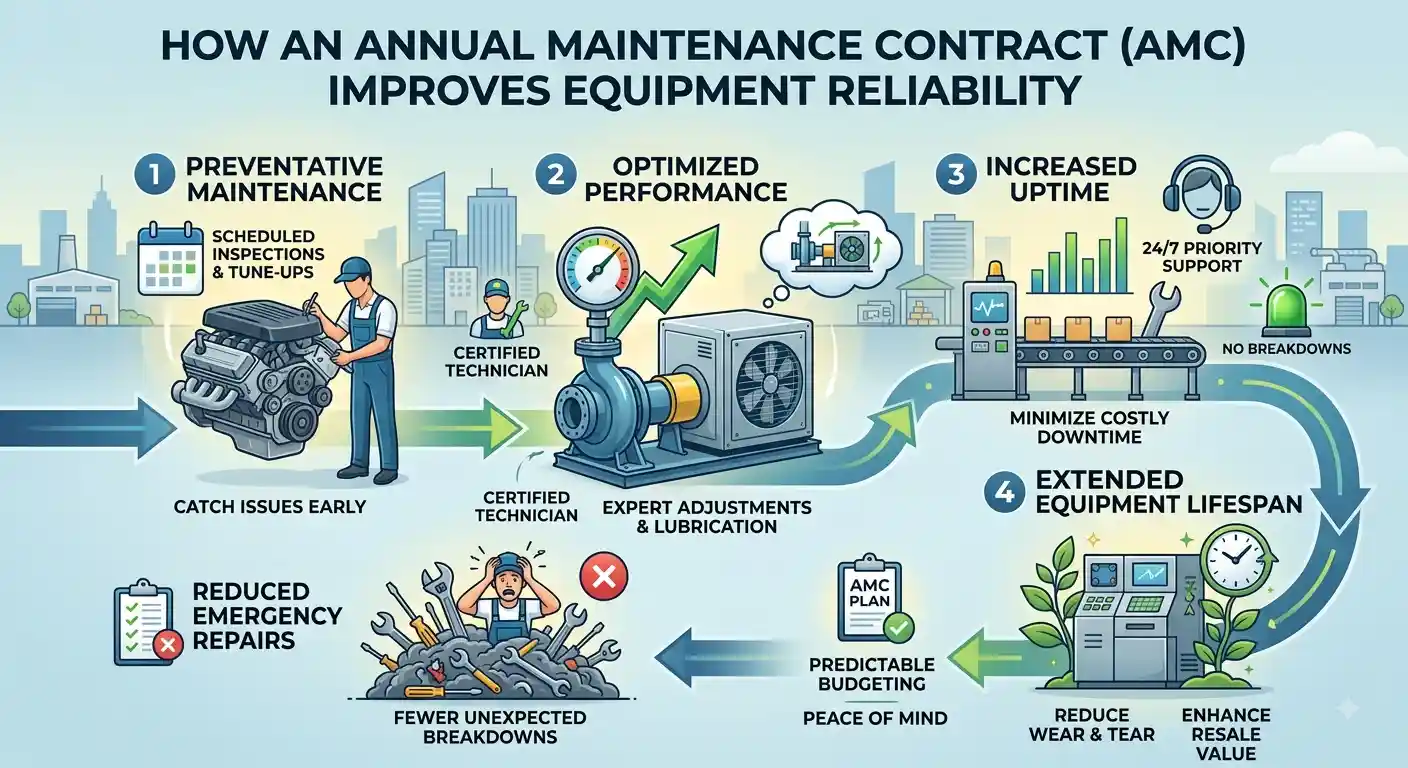
One of the most important ways an AMC can improve equipment reliability is through regular inspection.
During scheduled maintenance visits, technicians examine equipment for signs of wear, damage, unusual performance, leaks, loose connections, and other potential problems.
These inspections provide an opportunity to identify issues before they result in complete equipment failure.
Early detection can make repairs easier and may help reduce the risk of more extensive damage.
Preventive Maintenance Supports Consistent Performance
Preventive maintenance involves servicing equipment before a major problem occurs.
Depending on the equipment, preventive maintenance may include cleaning, lubrication, filter replacement, testing, adjustments, and inspection of individual components.
An AMC provides a structured schedule for carrying out these activities.
Consistent preventive maintenance can help equipment remain in better operating condition and reduce problems associated with neglected servicing.
Reduce Unexpected Equipment Failures
Unexpected failures can create significant challenges for businesses.
A critical system that stops working can interrupt operations, affect employees, inconvenience customers, and require urgent technical support.
An annual maintenance contract focuses on identifying potential problems before they develop into major failures.
Although no maintenance strategy can guarantee that equipment will never fail, regular professional servicing can reduce the risk of failures caused by poor maintenance or undetected faults.
Improve Equipment Performance
Equipment performance can gradually decline because of normal wear, contamination, damaged components, incorrect settings, or other technical issues.
During routine maintenance, technicians can identify factors that may be affecting performance.
Cleaning, adjustment, component servicing, and other maintenance procedures can help restore equipment to appropriate operating conditions.
Maintaining consistent performance is particularly important for businesses that rely on equipment throughout the working day.
Extend Equipment Lifespan
Equipment represents a significant investment for many businesses.
Premature replacement can increase capital expenses and create additional installation and training requirements.
Regular maintenance can help protect equipment from excessive wear and identify problems that could otherwise cause serious damage.
By maintaining equipment according to appropriate service schedules, businesses can support its long-term usability.
Reduce Downtime
Equipment reliability has a direct relationship with business downtime.
When equipment fails unexpectedly, operations may need to stop until the problem is resolved.
An AMC can help reduce the frequency of unexpected failures through planned servicing and regular inspection.
A maintenance provider may also provide technical support when a problem occurs, depending on the terms of the contract.
Maintain Safety Standards
Equipment reliability is also important for workplace safety.
Faulty electrical systems, damaged machinery, malfunctioning equipment, and other technical problems can create potential hazards.
Routine inspections can help identify safety-related maintenance issues before they become more serious.
A professional maintenance contract encourages businesses to address these concerns regularly instead of waiting until a failure occurs.
Monitor Equipment Condition Over Time
Equipment condition can change gradually.
A single maintenance visit provides only a snapshot of an asset’s condition. Regular maintenance visits allow technicians to observe changes over time.
Maintenance records can show whether equipment is developing recurring problems or requiring increasingly frequent repairs.
This information can help businesses decide whether continued maintenance, upgrades, or eventual replacement is the most practical option.
Access to Professional Expertise
Businesses may not always have the technical expertise required to maintain every system internally.
An AMC provides access to maintenance professionals who have experience working with specific equipment and systems.
Technicians can identify problems, perform scheduled servicing, and provide recommendations based on equipment condition.
Professional expertise can be especially valuable when dealing with complex commercial or industrial systems.
Improve Maintenance Scheduling
Unplanned maintenance can interfere with business operations.
An AMC creates a predefined schedule that allows maintenance visits to be arranged at suitable times.
Businesses can coordinate servicing around working hours, production schedules, customer activity, or other operational requirements.
Better scheduling can reduce disruption while ensuring that important maintenance tasks are completed consistently.
Reduce Recurring Equipment Problems
Some equipment problems occur repeatedly because the underlying cause is never properly addressed.
Repeated emergency repairs may temporarily restore operation without resolving the root issue.
With regular inspections and maintenance records, technicians can identify recurring faults and investigate their causes.
Addressing underlying problems can improve long-term equipment reliability and reduce repeated service requirements.
The Importance of Maintenance Records
Maintenance records provide valuable information about equipment history.
A professional AMC provider may record inspection dates, servicing activities, identified faults, repairs, replacement components, and recommendations.
These records help businesses monitor equipment performance and identify patterns.
They can also assist managers when making decisions about maintenance budgets and future equipment investments.
Choosing the Right AMC Provider
The quality of an annual maintenance contract depends heavily on the provider selected.
Businesses should evaluate the provider’s technical experience, technician qualifications, service availability, response times, and reputation.
The provider should have experience with the specific systems and equipment covered by the contract.
Businesses should also review the contract’s scope, exclusions, emergency support, and additional charges.
What Should Be Included in the Contract?
A well-defined AMC should clearly explain the equipment covered and maintenance services provided.
It should also identify the frequency of service visits, response times, emergency support, reporting procedures, payment terms, and exclusions.
Businesses should understand whether spare parts and major repairs are included or billed separately.
Clear contract terms help ensure that both parties have realistic expectations.
Final Thoughts
An Annual Maintenance Contract can play an important role in improving equipment reliability. Regular inspections, preventive servicing, professional technical support, and proper maintenance records can help businesses identify problems early and maintain equipment more consistently.
A proactive maintenance strategy can reduce unexpected failures, support equipment performance, minimize downtime, and protect valuable assets.
However, choosing the right maintenance provider is essential. Businesses should select a company with relevant technical expertise and carefully review the contract before signing.
With a well-planned maintenance agreement, businesses can take a more reliable and organized approach to managing their equipment throughout the year.
Related Reading: Can a Debt Collection Agency UAE Recover Debts from International Companies?
Related Reading: Unlocking the Potential of Web Hosting Solutions in the Middle East — full guide