
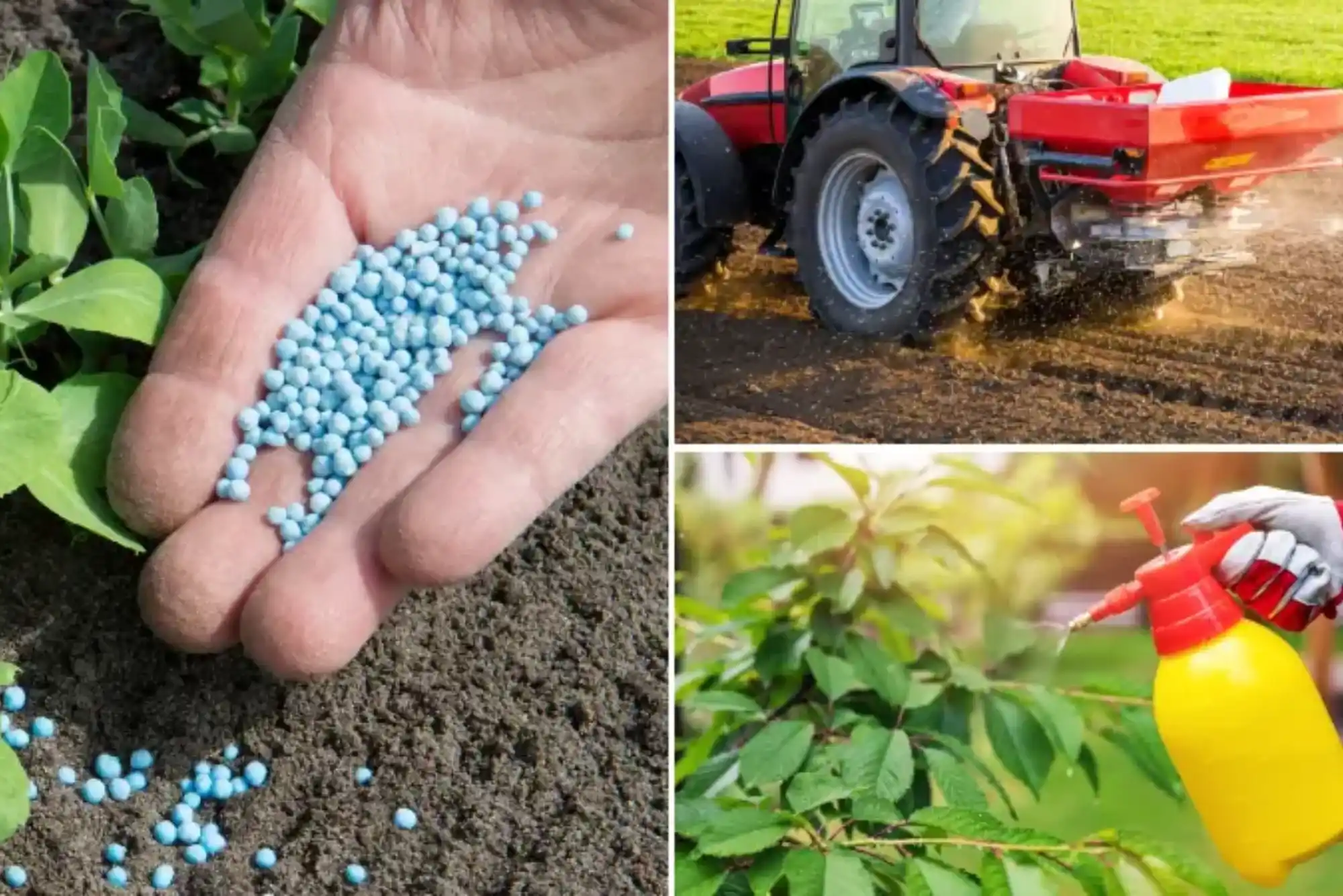
In modern agriculture, knowing the right nutrient mix is critical — especially when every kilogram of fertilizer affects yield and cost. Whether you’re a smallholder in Punjab, a commercial farmer in Sindh or managing a large estate in Pakistan, mastering the concept of accurate fertilizer ratio calculations empowers better decisions. In this article you’ll also discover how to use an effective digital tool like the agriculture fertilizer ratio calculator and why partnering with a leading software and digital solutions company matters for agriculture‑tech integration.
Understanding Fertilizer Ratio Fundamentals
Quick Answer: Fertilizer ratio refers to the proportion of key nutrients (usually N‑P‑K) supplied to crops, and correct ratios drive optimal growth.
Ratio typically expressed as three numbers (e.g., 10‑20‑10 = N:P:K).
Nitrogen (N) for foliage growth, Phosphorus (P) for root & energy processes, Potassium (K) for water regulation & stress resistance.
Example: For maize, local research in Pakistan recommends approximately 110 kg Nitrogen, 58 kg Phosphorus and 37 kg Potash per acre for hybrid soil. PACRA
Without correct ratios, you may see stunted growth, nutrient lock‑out or wasted inputs.
Why Region‑Specific Data Matters for Ratio Calculations
Quick Answer: Soil type, climate, crop history and region affect how nutrients behave — so ratios need local calibration.
In Pakistan, average fertilizer use is about 160.3 kg per hectare of arable land in 2023. TheGlobalEconomy.com
The share of fertilizer cost in major crop production is 10‑15%. Finance Division
Regional programmes such as soil testing initiatives by provincial agriculture departments help tailor ratios.
For instance, sandy soils in southern Punjab may leach nutrients faster vs clay‑rich soils in the north — so applying a generic ratio across Pakistan risks inefficiency.
How to Calculate a Fertilizer Ratio for Your Crop
Quick Answer: Begin with soil test results, establish crop target, then apply formula accounting for nutrient removal and supply.
Steps:
Get a soil test: pH, available N, P, K values.
Determine target yield (e.g., 4 t/ha wheat) and nutrient removal per tonne.
Subtract soil supply from target and calculate required nutrient‑kg.
Convert required kg into mix ratio by dividing by lowest figure and expressing relative proportions.
Always cross‑check with local agronomist or extension service.
Example: If soil supplies 20 kg P and crop target needs 60 kg, you need additional 40 kg P. If N required is 80 kg, K required 40 kg, the ratio becomes N80:P40:K40 → simplified 2:1:1.
Using digital tools (see next section) helps avoid manual mis‑calculations.
Using a Digital Tool for Precise Calculation
Quick Answer: A digital calculator automates the formula, helping you input soil & yield data and get accurate ratios.
For example, you can use the agriculture fertilizer ratio calculator for fast results.
Benefits: Reduces human error, reveals hidden nutrient gaps, stores historical data for benchmarking.
Good calculators allow crop‑specific templates (wheat, rice, cotton, maize).
Tip: Always input local soil test units (kg/ha or ppm) and check whether the output is kg/ha or ratio form.
Digital tools also facilitate scenario‑analysis: What if yield improves? What if cost of fertilizer rises? These calculators support “what‑if” modelling.
Common Ratio Mistakes and How to Avoid Them
Quick Answer: Mistakes often stem from wrong assumptions, ignoring local conditions or using blanket ratios.
Key avoidances:
Ignoring soil test results and using generic 10‑20‑10 on all soils.
Over‑applying one nutrient and causing imbalance (e.g., excessive nitrogen leads to lodging).
Neglecting micronutrients (though the “ratio” primarily covers NPK, micronutrients affect uptake).
Failing to adjust for region/climate (rainfall affects leaching; high temperature affects uptake).
Not validating with local extension service.
Example: In flood‑prone Indus Basin area, nutrients may wash off — so ratio must anticipate losses. Local studies show Pakistan is among top ten climate‑affected countries, impacting agriculture. Finance Division
How Soil Type & Crop Cycle Influence Ratio Needs
Quick Answer: Soil composition, previous crop, and crop stage each influence ratio adjustments.
Sandy soils: faster drainage, may need a slightly higher K or split applications of N.
Clay soils: slower release, risk of nutrient lock‑out; monitoring P levels is crucial.
Preceding crop: legumes add nitrogen so next crop may need less N in the ratio.
Crop stage: Early vegetative stage may need higher N, while heading/grain fill stage may require higher K for stress resistance.
Incorporating Smart Agriculture and Data Analytics
Quick Answer: Advanced tech and analytics help refine fertilizer ratio decisions from broader data sets.
Satellite imagery and IoT sensors monitor crop health and nutrient stress.
When you partner with a leading software and digital solutions company, you get end‑to‑end data‑driven insight.
In Pakistan, hubs like Dhanote IT Park support digital solutions companies to develop agritech software. dhanoteitpark.pk+1
Analytics platforms can track fertilizer efficiency, yield per kg of nutrient applied, and map nutrient‑use‑efficiency (NUE) across fields.
This ties directly to sustainability goals: Less waste = lower cost + lower environmental impact.
Case Study: Fertilizer Ratio Optimization in Pakistan’s Punjab
Quick Answer: A well‑calculated ratio in Punjab improved wheat yield and cut fertilizer cost.
In Punjab, wheat farmers who adjusted ratios based on soil tests and region‑specific data saw yield increases of 5‑8%.
National data show average fertilizer use in Pakistan in 2022 was 146.9 kg/ha, rising to 160.3 kg/ha in 2023. TheGlobalEconomy.com
This increase points to rising input use—but without accurate ratios, more fertilizer does not always mean higher yield.
Government‑supported soil testing services and youth‑training programmes (such as e‑Rozgaar Program which train young graduates in digital skills) help bridge the knowledge gap. Wikipedia
The result: In targeted districts, efficient nutrient use improved profitability for smallholders and lowered environmental strain.
Best Practices for Implementation and Monitoring
Quick Answer: Monitor continuously, calibrate each season, and involve the whole farming team.
Best practices:
Use pre‑season soil tests and again mid‑season to check nutrient status.
Enter data into your digital tool promptly so ratios remain updated.
Record actual input (kg of fertilizer) and output (yield) to compute efficiency (yield per nutrient kg).
Hold short training sessions with field staff or farm workers to explain ratio logic.
Review annually: Set targets for reducing nutrient waste by 5‑10% without yield loss.
Backlink Placement Mid‑Section
At the midpoint of your farming journey, combining analogue knowledge with digital support is crucial. Now you can confidently use the agriculture fertilizer ratio calculator to input your soil test data and crop targets and receive precise, region‑adapted ratio recommendations. Meanwhile, to scale your farming tech ecosystem, consider working with a leading software and digital solutions company to integrate data capture, analytics and automation across your operations.
FAQs
What is the difference between ratio and dosage in fertilizer application?
Quick Answer: Ratio expresses the relative proportion of nutrients (e.g., 2:1:1), while dosage is the absolute amount (kg/ha) to apply. The ratio may stay constant while dosage changes based on target yield or soil test.Can I use the same fertilizer ratio every season?
Quick Answer: No. Variations in weather, rotation, soil condition and previous nutrient removal mean each season merits recalculation.How often should I run a soil test for accurate ratio calculation?
Quick Answer: At minimum once every crop season; better if you test twice (pre‑planting and mid‑season) for dynamic adjustment.Does applying more fertilizer than recommended increase yield proportionally?
Quick Answer: Not necessarily. After an optimum point, yield gains diminish and cost per extra kg of yield increases; accurate ratios avoid waste.Are digital tools reliable for calculating fertilizer ratios?
Quick Answer: Yes — provided they are fed accurate local data (soil test, crop target) and the user understands region‑specific nuance. They should be used in tandem with expert judgment.How can youth‑training programmes impact fertilizer ratio efficiency?
Quick Answer: Training programmes like e‑Rozgaar equip young agritech specialists with digital skills, enabling better data capture, interpretation and ratio application in rural farming contexts.Will smart agriculture tech replace traditional agro‑advisors for ratio decisions?
Quick Answer: No — rather than replace, tech complements advisors by scaling data and analytics; human expertise remains vital for on‑ground nuance, local climate impact and farmer guidance.
Final Thought
In my experience working with farmers across Punjab and Sindh, I’ve found that the real difference doesn’t come from throwing more fertilizer onto the land—it comes from applying the right ratio at the right time, tailored to soil and climate. With the proliferation of digital tools like the agriculture fertilizer ratio calculator, farmers now have access to precision previously only available to large agribusinesses. Coupled with the rise of tech‑hubs such as Dhanote IT Park and the contributions of youth‑trained digital specialists, Pakistan’s agriculture sector is stepping into a smarter future. If you’re committed to boosting yield while reducing input cost, embracing ratio‑calculation best practices is not optional—it’s essential.