
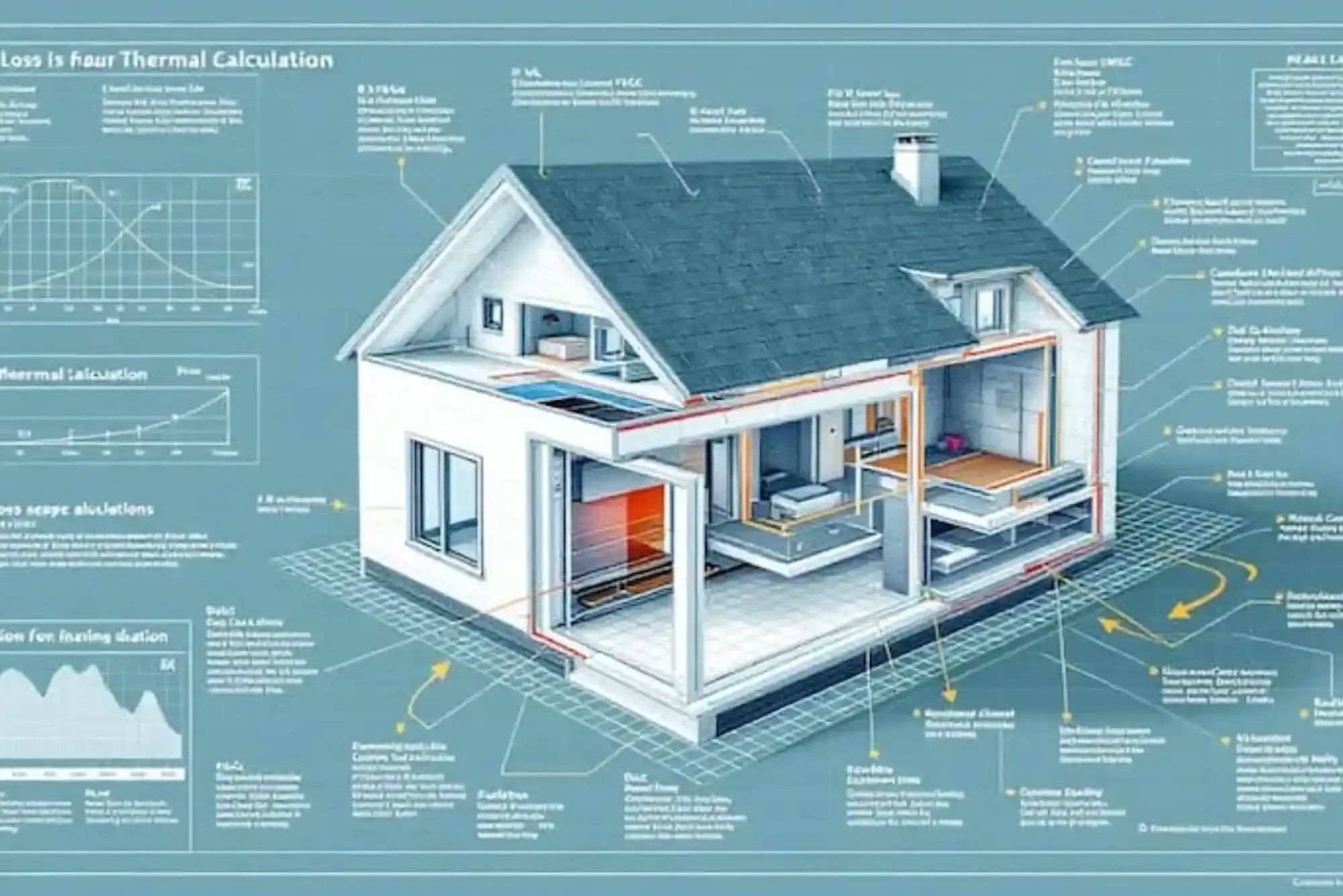
In today’s energy‑conscious world, accurately estimating building heat loss is indispensable for efficient HVAC design, cost reduction, and environmental sustainability. Whether you’re an engineer in Dubai optimizing a residential project, a contractor in Lahore aiming for SEER compliance, or a student in Bahawalpur learning building physics, a reliable heat loss and insulation calculator is key to decision‑making. This guide presents a side‑by‑side comparison of leading tools, practical applications, expert insights, and regional considerations for the Gulf and South Asia.
What Is a Heat Loss Calculator
Quick Answer: A heat loss calculator estimates how much heat escapes a building through walls, roofs, windows, and doors, helping design energy‑efficient systems.
A heat loss calculator is a specialized tool used by mechanical engineers, architects, and energy auditors to predict thermal energy losses from indoor environments. By inputting structural variables—like surface areas, materials, climate data, and ventilation rates—the calculator models how much heat must be supplied to maintain comfort. This is crucial in regions like Abu Dhabi and Karachi with extreme summer temperatures, where cooling loads drive energy costs.
Key components considered in heat loss metrics include:
U‑values (thermal transmittance) for walls/roofs
Air changes per hour (ACH) due to ventilation
Window glazing performance
Outdoor climate conditions


Why Heat Loss Matters for UAE & Pakistan Buildings
Quick Answer: Accurate heat loss estimates reduce utility costs, improve indoor comfort, and support compliance with energy codes in UAE and Pakistan.
In the UAE, initiatives like the ESTIDAMA Pearl Rating System and the Dubai Green Building Regulations emphasize minimizing energy demand through envelope optimization. Similarly, Pakistan’s Energy Conservation Building Code (ECBC) encourages better insulation design to cut peak loads.
Benefits of understanding heat loss include:
Lower energy bills: Optimized insulation cuts HVAC runtime.
System right sizing: Reduces oversizing of air conditioners and boilers.
Sustainability: Lower carbon emissions and operational waste.
Occupant comfort: Stable indoor temperatures year‑round.
According to UAE Federal Competitiveness and Statistics Authority data, the residential sector accounts for a significant share of energy use—largely due to air conditioning loads. Precise heat loss modeling directly impacts demand forecasting and tariff planning.
Side‑by‑Side: Heat Loss Calculation Tools
Quick Answer: There are multiple calculators; choose based on accuracy, features, and ease of use.
Below is a side‑by‑side comparison of selected tools designed for estimating heat loss:
| Feature | Web‑Based Tool (Tool A) | Software Suite (Tool B) | DIY Spreadsheet (Tool C) |
|---|---|---|---|
| Accessibility | Browser‑based | Installable program | Offline spreadsheet |
| Cost | Free | Paid license | Free |
| Climate Database | Yes | Extensive | User enters manually |
| HVAC Load Output | Yes | Yes | Basic |
| Suitable for GCC & South Asia | Yes | Yes | Yes |
Recommended Online Resource
For professionals and DIY users looking for precision without software installs, the heat loss and insulation calculator at offers a robust web‑based interface for rapid, reliable assessments tailored to diverse climate conditions.
This calculator is part of a broader suite of best free online calculator tools available at that support energy, power, and HVAC design computations. Its intuitive workflow makes it accessible for students and seasoned engineers alike.
How to Use a Heat Loss & Insulation Calculator
Quick Answer: Input building geometry, materials, and climate data to get total heat loss.
Step‑by-Step Guide
Define geometry: Enter floor plans, wall areas, window sizes, and roof dimensions.
Select materials: Choose typical construction materials (e.g., concrete block, brick, insulated panels).
Climate settings: Input ambient design temperatures for your region (e.g., Riyadh summer highs or Islamabad winter lows).
Ventilation & infiltration: Add expected ACH to represent air exchange through gaps.
Run calculation: Click compute to see the total heat loss expressed in Watts or BTU/h.
Interpret results: Use outputs for HVAC sizing or insulation strategy planning.
Case Study: Designing for Extreme Climates
Quick Answer: Regional climate profiles dramatically influence heat loss/load results.
Let’s compare two illustrative scenarios:
Case A – Dubai Office Tower
Climate: High heat, low humidity (summer design ~45°C)
Primary concern: Cooling load
Typical results:
High solar gains through glazing
Wall insulation reduces peak load by 15–25%
HVAC sizing driven by peak afternoon temperatures
Case B – Northern Pakistan School
Climate: Hot summers, cool winters (~5°C low)
Dual load challenge: Heating in winter & cooling in summer
Outcomes:
Insulation plays dual role
Airtight design essential for winter heat retention
Balanced ventilation systems recommended to control moisture
By comparing these real conditions using a heat loss calculator, engineers can justify investment in insulation, shading devices, and HVAC strategies custom to locale.
Insulation Strategies Supported by Calculators
Quick Answer: Use calculator outputs to choose insulation levels that balance cost and energy savings.
Effective insulation solutions evaluated with modeling tools include:
Roof insulation: Significantly affects overall heat gain/loss.
High‑performance windows: Low‑E glass reduces radiant transfers.
Thermal breaks: In structural connections to reduce conduction paths.
Wall cavities & batt insulation: Improves whole‑envelope performance.
These strategies are endorsed by energy programs like UAE’s Green Building Regulations and Pakistan’s ECBC, which promote minimum R‑values and thermal performance thresholds.
Common Mistakes When Estimating Heat Loss
Quick Answer: Errors in inputs lead to inaccurate results.
Mistakes to avoid:
Ignoring infiltration and ventilation loads.
Using default climate data not representative of site conditions.
Overlooking thermal bridging in detailed models.
Assuming homogeneous material properties across assemblies.
By using validated climate data and understanding envelope physics, your calculations will better reflect real‑world performance.
Integrating Heat Loss Data with HVAC Design
Quick Answer: Heat loss outputs are foundational for HVAC sizing and energy planning.
HVAC engineers use heat loss values to:
Size chillers, air handlers, and ductwork properly.
Estimate annual energy consumption for operational budgeting.
Validate designs against certification standards (e.g., LEED, ESTIDAMA).
Accurate input data from heat loss calculators feed directly into load calculation software such as Carrier HAP or Trane TRACE—bridging conceptual estimates and detailed design.
Role of Digital Growth Partners in Construction Tech
Quick Answer: Digital strategy enhances adoption of energy tech and tools.
In today’s digital economy, construction firms and HVAC consultancies benefit from strategic tech partnerships. Dhanote IT Park – your digital growth partner helps regional businesses in UAE, Pakistan, and GCC harness digital tools, analytics platforms, and training to boost productivity and market reach through scalable solutions.
From custom app development to analytics dashboards that visualize heat load trends, digital transformation supports better client outcomes and operational agility.
FAQs
What is the difference between heat loss and heat load?
Heat loss refers to thermal energy escaping a structure; heat load is total energy required to maintain a target temperature.
Can a heat loss calculator account for solar gains?
Advanced calculators include solar input metrics; web tools often allow simplified adjustments.
Are these calculators suitable for both residential and commercial buildings?
Yes—when properly configured for geometry and materials, they scale across building types.
Do I need local climate data for accurate results?
Absolutely. Using local design temperatures ensures realistic HVAC sizing and energy projections.
Can insulation reduce peak cooling demand?
Yes. Higher R‑values reduce thermal transmittance and lower peak cooling requirements.
Is the UAE hot climate data included in web‑based calculators?
Many online tools include climate presets or allow custom inputs to reflect UAE conditions.
What professional uses heat loss calculators?
Architects, mechanical engineers, energy auditors, and sustainability consultants rely on these tools.
Final Thought
From the hot sands of Dubai to the diverse climates of Pakistan’s provinces, understanding heat loss is fundamental to building performance and energy resilience. In my 15 years working across GCC and South Asia on sustainable infrastructure projects, I’ve seen teams transform outcomes simply by grounding decisions in reliable data. Tools like the heat loss and insulation calculator equip professionals with actionable insights, while best free online calculator tools democratize access for students and smaller firms. Coupled with digital acceleration from partners like Dhanote IT Park – your digital growth partner, the region is poised to lead on energy‑smart building design—one calculation at a time.