Education is quietly undergoing one of the biggest transformations in modern history. What once depended on physical classrooms, fixed schedules, and geographic limitations has evolved into something far more flexible. Students are now attending lessons from different countries, collaborating across time zones, and learning through experiences that extend beyond textbooks.
The growth of remote work accelerated this shift, but the long-term change goes deeper than convenience. Families want adaptable education systems that move with their lifestyles instead of forcing life to revolve around school locations. That demand has created space for a more personalized learning model — one where the role of the travel tutor is becoming increasingly important.
At the same time, global cities are adapting to these new lifestyles. Discussions around flexible mobility and international living, particularly in destinations such as Dubai’s evolving corporate travel culture, show how work, movement, and education are becoming closely connected.
Why Traditional Education Models Are Being Reconsidered
For decades, education followed a relatively stable structure. Students attended local schools, teachers delivered standardized lessons, and learning happened within rigid systems. While that model still works for many families, it no longer fits every lifestyle or learning style.
Remote work has allowed parents to relocate more freely. Some families travel seasonally. Others split time between countries. In these situations, traditional schooling can become difficult to maintain consistently.
There is also growing awareness that students absorb information differently. Some thrive in large classrooms, while others perform better through personalized attention, experiential learning, or self-paced environments.


Remote education emerged not merely as an alternative, but as a practical response to changing modern realities.
The Rise of the Travel Tutor
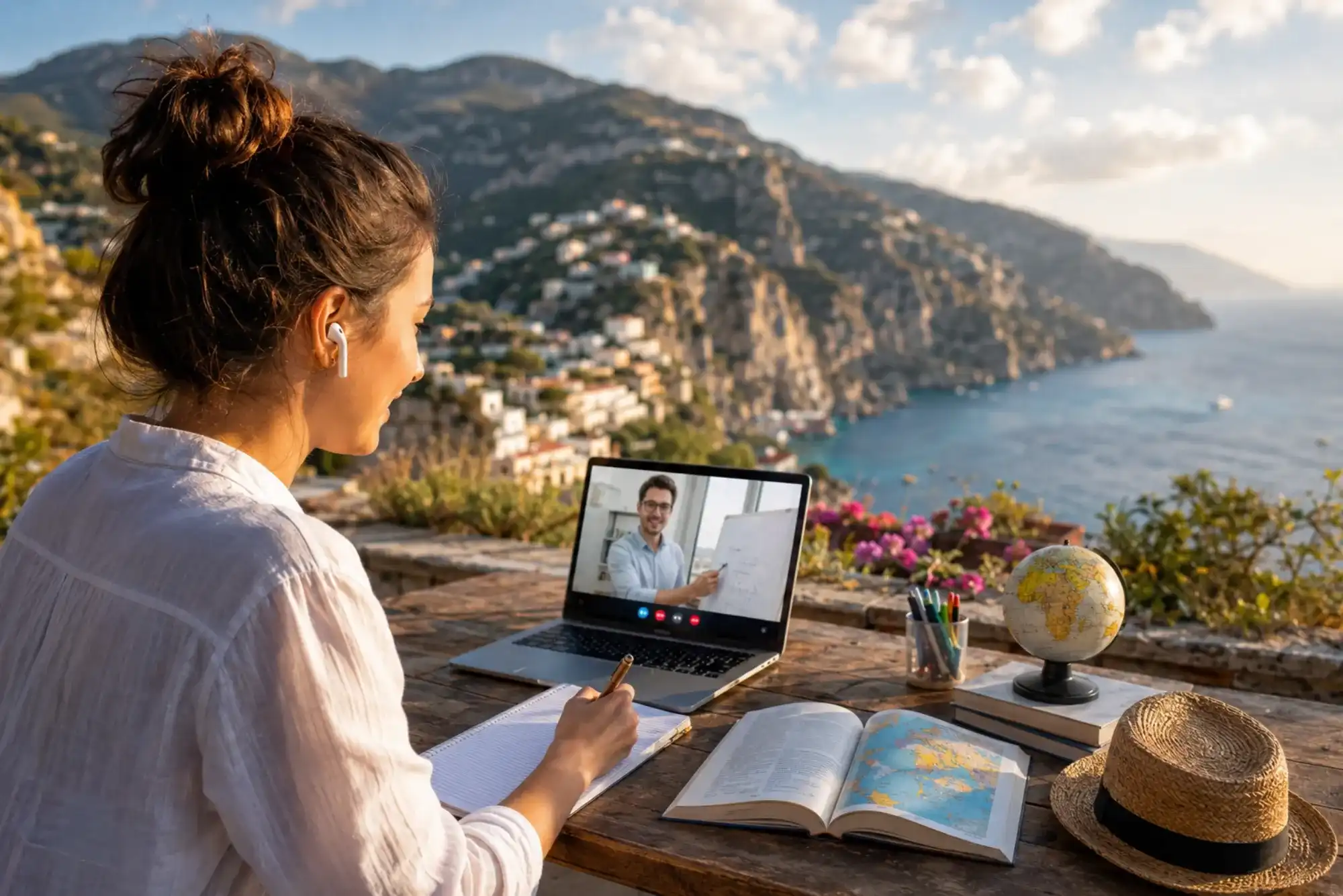
A travel tutor represents more than an online instructor teaching from another location. The role combines education, mentorship, cultural immersion, and mobility into one adaptive learning experience.
Some tutors travel alongside families for extended educational journeys. Others teach remotely while integrating location-based learning into lessons. A history session becomes more engaging when connected to historical sites students can physically explore. Geography becomes easier to understand when lessons correspond with real landscapes and cultures.
This model has gained attention among globally mobile families, entrepreneurs, athletes, performers, and digital nomads seeking continuity without sacrificing flexibility.
Unlike rigid academic systems, travel-oriented education allows learning to evolve around real-life experiences.
Remote Education Is Becoming More Human, Not Less
One of the biggest misconceptions about remote education is that technology makes learning feel impersonal. In practice, many students experience the opposite.
Smaller virtual classes and personalized tutoring often create stronger teacher-student interaction than crowded classrooms. Tutors can tailor lessons around individual strengths, weaknesses, and interests.
Students who struggle in standardized environments frequently become more confident when learning feels collaborative rather than institutional.
This emotional connection matters. Education is not only about information transfer; it is also about motivation, curiosity, and personal growth.
Flexible educational systems are increasingly supported by lifestyle infrastructure as well. Families embracing remote learning often prioritize mobility-friendly housing and adaptable living environments. Conversations surrounding modern apartment leasing for international residents reflect how mobility now shapes everyday decision-making.
How Technology Is Reshaping Global Learning
Modern educational technology has matured significantly in recent years. Remote learning platforms are no longer limited to video calls and uploaded worksheets. Today’s systems include interactive collaboration tools, AI-assisted learning support, virtual classrooms, and adaptive progress tracking.
Technology now enables:
- Live one-on-one tutoring sessions
- International collaborative classrooms
- Language immersion through native speakers
- Interactive project-based learning
- Personalized academic pacing
Importantly, technology works best when paired with skilled educators who understand how to guide students emotionally and intellectually.
The strongest remote learning experiences are not fully automated. They combine digital efficiency with human mentorship.
The Educational Value of Travel Experiences
Travel introduces forms of learning that traditional classrooms cannot fully replicate. Students exposed to different cultures, languages, transportation systems, and social environments naturally develop adaptability and confidence.
Experiential learning strengthens memory retention because students associate information with real-world experiences. Visiting historical landmarks, navigating unfamiliar cities, or communicating across language barriers creates emotional engagement that often deepens understanding.
A student learning marine biology near coastal ecosystems absorbs lessons differently than one reading about ocean conservation from a textbook alone.
This is one reason educational travel programs continue gaining popularity. They transform learning into lived experience rather than passive memorization.
Why Families Are Choosing Flexible Education Paths
Many parents are reevaluating what they want education to accomplish. Academic performance still matters, but modern families increasingly prioritize qualities such as creativity, adaptability, independence, and cultural awareness.
Remote learning and travel-based tutoring often support these goals naturally.
Parents are asking broader questions than previous generations:
- Will my child develop practical life skills?
- Can education adapt to future careers and technology?
- How important is global awareness?
- Does learning encourage independent thinking?
These concerns explain why alternative educational models are no longer viewed as niche experiments. They are becoming realistic long-term options for many households.
The Connection Between Mobility and Modern Education
Global mobility is influencing education more than many institutions anticipated. Remote-working parents increasingly seek locations that support both professional productivity and family flexibility.
Cities with strong infrastructure, international communities, and reliable transportation have become especially attractive. Dubai, for example, continues attracting globally mobile professionals because it combines connectivity, safety, and multicultural living.
Travel convenience itself plays a major role in these lifestyle decisions. Families relocating temporarily or traveling for extended periods often rely heavily on dependable transit systems and travel support services. Practical guides discussing topics like reliable airport transportation in Dubai illustrate how seamless mobility has become part of modern remote lifestyles.
Challenges Facing Remote Education
Despite its advantages, remote learning is not perfect. Flexibility can sometimes create inconsistency if families fail to maintain structure and accountability.
Students still need routine, academic planning, and opportunities for social interaction. Successful remote education requires thoughtful organization rather than complete spontaneity.
Common challenges include:
| Challenge | Impact | Possible Solution |
|---|---|---|
| Time zone differences | Scheduling difficulties | Flexible learning calendars |
| Internet reliability | Interrupted lessons | Backup connectivity plans |
| Social interaction concerns | Isolation risks | Community activities and clubs |
| Curriculum continuity | Learning gaps | Long-term academic planning |
The most effective families usually blend multiple educational experiences instead of relying on one system exclusively.
The Psychological Benefits of Personalized Learning
Students often perform better when learning feels relevant and engaging. Personalized tutoring environments allow educators to adapt pacing, communication style, and teaching methods according to individual personalities.
That flexibility can reduce academic anxiety and improve confidence.
Children who struggle in large classrooms sometimes flourish in one-on-one settings where they feel heard rather than overlooked. Others benefit from the ability to move faster through subjects they enjoy without waiting for entire groups to progress.
Personalized learning also encourages curiosity — a trait increasingly valuable in rapidly changing industries and technologies.
Experiential Learning and Cultural Awareness
One of the strongest arguments supporting travel-integrated education is cultural exposure. Students who engage with different communities from an early age often develop stronger communication skills and broader perspectives.
Exposure to unfamiliar environments teaches resilience naturally. Children learn to adapt, ask questions, and navigate uncertainty with greater confidence.
Language acquisition improves significantly as well. Students practicing new languages in real social environments typically develop conversational skills faster than those limited to classroom exercises.
Educational travel also encourages observational learning. Students notice architecture, customs, transportation systems, and social behaviors that textbooks rarely capture effectively.
Travel itself becomes part of the curriculum.
How Schools and Institutions Are Responding
Educational institutions are beginning to adapt to changing expectations. Some schools now offer hybrid learning systems that combine online coursework with optional campus experiences. Others partner with international educators and mentors to support flexible learning pathways.
Universities are paying attention as well. Admissions departments increasingly recognize that experiential learning, independent study, and global exposure can strengthen student development.
The private education sector has responded especially quickly. Personalized tutoring services, digital academies, and international homeschooling communities continue expanding across multiple regions.
At the same time, industries outside education are adapting to support mobile lifestyles. Hospitality providers, co-living spaces, and travel-focused businesses increasingly market services toward remote-working families.
What the Future of Remote Education May Look Like
The next phase of remote education will likely focus less on replacing schools entirely and more on creating flexible educational ecosystems.
Students may move between traditional schools, online learning platforms, mentorship programs, and travel-based experiences depending on their goals and circumstances.
Technology will continue evolving, but human guidance will remain essential. Students still need mentorship, accountability, emotional support, and intellectual challenge.
The future classroom may no longer be tied to one physical location. Learning could happen across cities, cultures, digital communities, museums, natural environments, and collaborative global networks.
This transformation is already visible among internationally mobile families exploring more adaptive educational experiences. Many are turning toward platforms built around the idea of travel tutor who can combine structured education with real-world exploration.
Conclusion
The Future of Remote Education and the Rise of the Travel Tutor reflects a broader shift in how society defines learning itself. Education is becoming more flexible, personalized, and globally connected than ever before.
Families are no longer limited by geography in the same way previous generations were. Students can now learn across cultures, collaborate internationally, and build real-world skills alongside academic knowledge.
Traditional schools will continue serving millions of students successfully, but alternative learning pathways are becoming increasingly mainstream. The growth of remote education, experiential learning, and travel-integrated tutoring suggests that the future of education may depend less on where students sit and more on how deeply they engage with the world around them.
FAQs
What is a travel tutor?
A travel tutor is an educator who combines flexible teaching with travel-based or location-independent learning experiences.
Is remote education effective for children?
Yes, many students perform well in remote education environments, especially when learning is structured and personalized.
Can travel-based education replace traditional schools?
For some families it can, but many people combine traditional schooling with remote and experiential learning approaches.
What skills do students gain from travel-oriented learning?
Students often develop adaptability, communication skills, cultural awareness, independence, and practical problem-solving abilities.
Why is remote education growing in 2026?
Advancements in technology, remote work lifestyles, and demand for personalized learning continue driving the growth of flexible education models.